 |  |  |
Want to know how to stretch your DoTERRA Essential Oils farther? Read on......
What is a coconut?
First, let's start with what a coconut is. The word coconut itself sounds like it must be a nut. But did you know botanically speaking, coconuts are actually a fruit, a nut and a seed? They are also known as a dry drupe or a fibrous one-seeded drupe that is a hard stony covered fruit, meaning overripe olive, that has 3 layers: the exocarp (outer), the mesocarp (fleshy middle), and the endocarp (hard, woody layer surrounding the seed). Scientists often refer to a coconut as a water dispersal fruit and seed, the seed being the reproductive part of the flowering plant, that has the baby plant inside. You will notice there are 3 eyes or pores on one end of the coconut.
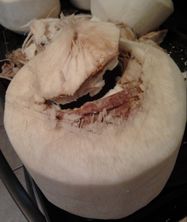
Most often you will see the hard brown fibrous coconut in your grocery store that has the exocarp and mesocarp already removed so you are buying the endocarp. Inside is the hard white coconut that you will want to dig for to eat which is called the endosperm. You may also see or may be able to order young green coconuts from your grocery store that still have all three layers on them. Inside these young coconuts is white coconut that is soft like pudding that is easy to remove and eat.
Often people poke holes in the pores to let the liquid flow out to drink. You can also cut away the exocarp outer layer below the pores and hack the hard shell with a sharp knife to crack the shell to open. The inner color of the coconut flesh should be white.
Coconuts are referred to as the "Tree of Life" because over the years it has be utilized for such things as drinking, fiber, food, shade, thatching, hats, baskets, clothing, shampoo, charcoal, fuel, utensils, musical instruments, etc.. During World War II and Vietnam, doctors used coconut water when IV solutions were in short supply.
Benefits of Coconut Oil
Sayer Ji explains that coconut oil has many therapeutic health benefits and is also known as an exceptional healing agent with many health applications, including:
DoTERRA's Fractionated Coconut Oil Product
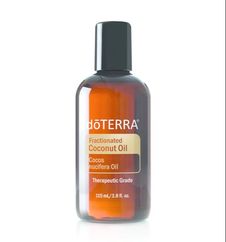
DoTERRA also recognizes the benefits of coconut oil and offers a Fractionated Coconut Oil product for use with their products, which is an all-natural carrier oil that softens and hydrates dry skin without clogging pores while also increasing essential oil distribution with no greasy after effect. It is the perfect companion to blending with essential oils as it preserves and maintains their original fragrance and benefits, since it is colorless and odorless. This is the carrier of my choice when applying strong essential oils topically to help reduce skin sensitivity and to get the many added benefits of coconut oil in addition to the benefits of the essential oils. You can dilute one part essential oil to five parts or more of Fractionated Coconut Oil depending on skin sensitivity, or as directed on an essential oil label. And the best part is that is stretches your oils farther by allowing them to mingle longer with the coconut oil instead of being disbursed more quickly.
More Easy Fractionated Coconut Oil Uses:
I hope you enjoy using DoTERRA Fractionated Coconut Oil and Essential Oils as much as I do :) For more information and to order Fractionated Coconut Oil, click here.
Sending you much joy and abundance on your wellness journey.
Maria Lisa Polegatto, CMP, RAS, BACS
DoTERRA Certified Sales Pro & Essential Oil Specialist #4776217
Join My Team/ Shop 24/7
References:
Fractionated Coconut Oil Uses and Benefits. (2017, June 26). Retrieved August 07, 2017, from https://www.doterra.com/US/en/blog/spotlight-fractionated-coconut-oil
Ji, S., & Sayer JiSayer Ji is the founder and chair of GreenMedInfo.com. His writings have been published in the Wellbeing Journal, the Journal of Gluten Sensitivity, and have been featured on numerous websites, including Mercola.com, NaturalNews.com, Infowars.com, Care2.com. His critically acclaimed essay series The Dark Side of Wheat opens up a new perspective on the universal, human-species specific toxicity of wheat, and is now available for PDF download. (2014, November 25). 13 Evidence-Based Medicinal Properties of Coconut Oil. Retrieved August 07, 2017, from http://kindredmedia.org/2012/12/13-evidenced-based-medicinal-properties-of-coconut-oil/
Is a coconut a fruit, nut or seed? (n.d.). Retrieved August 07, 2017, from https://www.loc.gov/rr/scitech/mysteries/coconut.html
This post is for informational purposes only. Please seek the advice of a health care professional where appropriate. This information is not intended to treat, cure, diagnose or prevent any illness, disease or other affliction, medical or otherwise.
Cautions
Keep out of reach of children. If you are pregnant, nursing, or under a doctor’s care, consult your physician. Avoid contact with eyes, inner ears, and sensitive areas.
What is a coconut?
First, let's start with what a coconut is. The word coconut itself sounds like it must be a nut. But did you know botanically speaking, coconuts are actually a fruit, a nut and a seed? They are also known as a dry drupe or a fibrous one-seeded drupe that is a hard stony covered fruit, meaning overripe olive, that has 3 layers: the exocarp (outer), the mesocarp (fleshy middle), and the endocarp (hard, woody layer surrounding the seed). Scientists often refer to a coconut as a water dispersal fruit and seed, the seed being the reproductive part of the flowering plant, that has the baby plant inside. You will notice there are 3 eyes or pores on one end of the coconut.
Most often you will see the hard brown fibrous coconut in your grocery store that has the exocarp and mesocarp already removed so you are buying the endocarp. Inside is the hard white coconut that you will want to dig for to eat which is called the endosperm. You may also see or may be able to order young green coconuts from your grocery store that still have all three layers on them. Inside these young coconuts is white coconut that is soft like pudding that is easy to remove and eat.
Often people poke holes in the pores to let the liquid flow out to drink. You can also cut away the exocarp outer layer below the pores and hack the hard shell with a sharp knife to crack the shell to open. The inner color of the coconut flesh should be white.
Coconuts are referred to as the "Tree of Life" because over the years it has be utilized for such things as drinking, fiber, food, shade, thatching, hats, baskets, clothing, shampoo, charcoal, fuel, utensils, musical instruments, etc.. During World War II and Vietnam, doctors used coconut water when IV solutions were in short supply.
Benefits of Coconut Oil
Sayer Ji explains that coconut oil has many therapeutic health benefits and is also known as an exceptional healing agent with many health applications, including:
- Fat-burning
- Brain-Boosting
- Clearing Head Lice
- Healing Wounds
- NSAID Alternative
- Anti-Ulcer Activity
- Anti-Fungal
- Testosterone-Booster
- Reducing Swollen Prostate
- Improving Blood Lipids
- Fat-Soluble Nutrient Absorption
- Bone Health
- Sunscreen
DoTERRA's Fractionated Coconut Oil Product
DoTERRA also recognizes the benefits of coconut oil and offers a Fractionated Coconut Oil product for use with their products, which is an all-natural carrier oil that softens and hydrates dry skin without clogging pores while also increasing essential oil distribution with no greasy after effect. It is the perfect companion to blending with essential oils as it preserves and maintains their original fragrance and benefits, since it is colorless and odorless. This is the carrier of my choice when applying strong essential oils topically to help reduce skin sensitivity and to get the many added benefits of coconut oil in addition to the benefits of the essential oils. You can dilute one part essential oil to five parts or more of Fractionated Coconut Oil depending on skin sensitivity, or as directed on an essential oil label. And the best part is that is stretches your oils farther by allowing them to mingle longer with the coconut oil instead of being disbursed more quickly.
More Easy Fractionated Coconut Oil Uses:
- Massage: For an ideal massage, use Fractionated Coconut Oil with calming essential oils and massage into your neck and shoulders for a deep feeling of relaxation.
- Hair Management: Manage unruly hair, detangle and control frizz, while you also conditioning your hair.
- Facial Moisturizer: Fractionated Coconut Oil is also a great facial moisturizer for sensitive skin that leaves your skin feeling soft and smooth without clogging your pores or leaving your skin feeling greasy.
I hope you enjoy using DoTERRA Fractionated Coconut Oil and Essential Oils as much as I do :) For more information and to order Fractionated Coconut Oil, click here.
Sending you much joy and abundance on your wellness journey.
Maria Lisa Polegatto, CMP, RAS, BACS
DoTERRA Certified Sales Pro & Essential Oil Specialist #4776217
Join My Team/ Shop 24/7
References:
Fractionated Coconut Oil Uses and Benefits. (2017, June 26). Retrieved August 07, 2017, from https://www.doterra.com/US/en/blog/spotlight-fractionated-coconut-oil
Ji, S., & Sayer JiSayer Ji is the founder and chair of GreenMedInfo.com. His writings have been published in the Wellbeing Journal, the Journal of Gluten Sensitivity, and have been featured on numerous websites, including Mercola.com, NaturalNews.com, Infowars.com, Care2.com. His critically acclaimed essay series The Dark Side of Wheat opens up a new perspective on the universal, human-species specific toxicity of wheat, and is now available for PDF download. (2014, November 25). 13 Evidence-Based Medicinal Properties of Coconut Oil. Retrieved August 07, 2017, from http://kindredmedia.org/2012/12/13-evidenced-based-medicinal-properties-of-coconut-oil/
Is a coconut a fruit, nut or seed? (n.d.). Retrieved August 07, 2017, from https://www.loc.gov/rr/scitech/mysteries/coconut.html
This post is for informational purposes only. Please seek the advice of a health care professional where appropriate. This information is not intended to treat, cure, diagnose or prevent any illness, disease or other affliction, medical or otherwise.
Cautions
Keep out of reach of children. If you are pregnant, nursing, or under a doctor’s care, consult your physician. Avoid contact with eyes, inner ears, and sensitive areas.