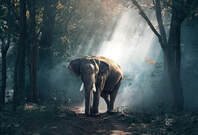
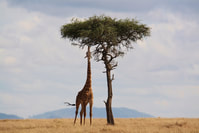
I have become increasingly dismayed and disappointed, to say the least, by the growing use of culling as a wildlife management tool. In many cases, this does not simply involve removing animals from a particular ecosystem or relocating them to another area. Instead, it involves deliberately reducing populations through annihilation of a species using lethal and inhumane means.
That hurts me deeply, and I am strongly opposed to the practice of culling.
These precious souls being annulated are so desperately needed to keep ecosystems healthy, encourage new growth and interconnectedness with other species and ecosystems (Polegatto, 2020).
We still know so little about the earth, species and ecosystems, we do not have the right to decide on whether a species is allowed to live.
Wild Horses, Ecological Function, and Our Responsibility as Guardians
I believe humans are guardians of the Earth, nature, and animals. Culling is not what I believe guardianship should look like. As caretakers, we have both a moral, ethical and ecological responsibility to ensure we are doing everything we can to preserve animal populations and fully understand their ecological roles.
There are often multiple management options available, and in my view, large-scale culling should not be an option. There are many alternatives to culling and a thorough evaluation of the ecological roles these animals play needs to be viewed from both negative and positive roles.
While I deeply love all of God's creatures, I have spent considerable time around horses and have come to appreciate their unique connection to the land, to people, and to one another.
Horses are intelligent, social, conscious animals that have shared a relationship with humans for thousands of years. As such, they deserve thoughtful, transparent, and evidence-based consideration in wildlife management decisions. Any assessment of horse populations and their impacts should draw upon a broad range of knowledge, expertise, and community perspectives to ensure balanced and informed decision-making.
This process should consider ecological, environmental, cultural, historical, social, economic, animal welfare, and mental health factors. By incorporating multidisciplinary expertise and meaningful public participation, management decisions can better reflect both scientific evidence and the values of the communities affected by those decisions.
Recommended assessment participants and information sources should include a variety of resources, including, but not limited to:
• Peer-reviewed research and scientific literature
• Ecologists and conservation biologists
• Environmental specialists and habitat experts
• Wildlife management professionals
• Veterinarians and equine health specialists
• Horse behavior and training specialists
• Youth representatives and future generations advocates
• Equine-assisted therapy practitioners
• Mental health professionals (psychologists, counselors, social workers) and advocates
• Ethical and Animal welfare organizations and advocates and experts
• Indigenous knowledge holders and Elders
• Rangeland and land-use specialists
• Environmental impact assessment specialists
• Universities and academic researchers
• Local communities and residents
• Public consultation and citizen input
• Recreational land users (hikers, campers, photographers, hunters, etc.)
• Tourism and recreation operators
• Agricultural and livestock stakeholders
• Non-profit conservation organizations
• Community wellness organizations
• Sociologists and human-animal relationship researchers
• Economists assessing environmental and community impacts
• Government agencies responsible for wildlife, environment, and public lands
Ecological Role of Horses
From a scientific perspective, wild horses are best understood as large mobile herbivores whose ecological roles depend on context, population density, and landscape sensitivity.
Ecologically, horses perform several well-documented functions:
- They graze vegetation and create grazing mosaics consisting of patches of short and tall vegetation.
- They redistribute nutrients, including nitrogen, phosphorus, and carbon, through movement, dung, and urine.
- They disperse seeds internally and externally, contributing to plant distribution across landscapes.
- They act as ecosystem modifiers, influencing plant community structure, habitat openness, and vegetation dynamics.
- They interconnect to other species an all ecosystems (Polegatto, 2020).
These roles are consistent with broader ecological research demonstrating that large animals function as nutrient transporters and ecosystem engineers (Roman, 2023; Doughty et al., 2016).
Horses provide value that extends beyond ecological considerations alone. For many people, they contribute to cultural heritage, community identity, education, recreation, healing, emotional well-being, and a deeper connection to the natural world.
Their presence can inspire people to spend time in nature, fostering appreciation, respect, and a sense of stewardship for the environment. Meaningful experiences with nature often help cultivate the passion and commitment needed to protect it. As a result, assessments and management decisions should consider not only ecological impacts but also the social, cultural, educational, and wellness benefits horses provide to communities.
Large Animals as Ecosystem Connectors
Research across terrestrial and marine ecosystems demonstrates that large animals often play ecological roles that extend far beyond their immediate habitat.
In marine systems, whales transport nutrients vertically through the water column and horizontally across ocean ecosystems, contributing to productivity and nutrient cycling. This concept of large-animal nutrient redistribution is well documented in marine ecology.
On land, similar processes occur through large herbivores, which move nutrients through grazing, movement, dung deposition, and seed dispersal. Ecosystems are not isolated compartments—they are interconnected networks.
My research on ocean systems, Deep Dive into the Ocean Ecosystem With the Giants, explores this ecological connectivity and the importance of nutrient movement across environments (Polegatto, 2020). What happens in one part of an ecosystem often affects another. Nutrients move. Species interact. Ecosystems are linked through physical and biological processes.
Rewilding and Functional Replacement
The idea that large herbivores may restore ecological function is also present in rewilding science.
Some researchers argue that modern large herbivores, including horses, may partially restore ecological processes once performed by extinct or greatly reduced megafauna, particularly in terms of grazing pressure, vegetation dynamics, and ecosystem heterogeneity (Donlan et al., 2006; Svenning et al., 2016; Bakker et al., 2016).
This does not mean modern horses are identical to extinct species, or that they function the same way in every ecosystem. Rather, they may serve as partial ecological analogs in some contexts, contributing to lost or reduced ecological processes.
Site-Dependent Ecological Impacts
Ecological research also demonstrates that horse impacts are highly site-dependent.
In some environments, high-density horse populations may contribute to soil compaction, erosion, streambank disturbance, and shifts in native vegetation. Effects on biodiversity can be positive in some grassland systems while negative in fragile alpine, wetland, or riparian ecosystems. Outcomes depend heavily on population size, available forage, climate, and ecosystem resilience (Beever & Herrick, 2006).
Because of this complexity, the scientific question is not whether horses are inherently "good" or "bad" for ecosystems.
Rather, the question should be:
What ecological functions do horses provide, what impacts do they cause, and what management approaches best balance ecosystem health and animal welfare?
Management Options
Importantly, ecological management does not reduce to a single method.
Available management options may include:
- Fertility control (immunocontraception)
- Relocation or adoption where feasible
- Spatial management to protect sensitive habitats
- Targeted population reduction where ecological thresholds have clearly been exceeded
These approaches are all recognized within modern wildlife management frameworks (IUCN, 2013) and in my opinion, should be forefront prior to lethal processes.
Again, I stress that we do not have enough knowledge of horses or other species to be able to make a decision to annihilate a species, even some of them. They are living breathing, thinking souls like humans. Because species other than humans can not speak human language does not mean they are disposable.
A Complete Ecological Assessment
A key scientific takeaway is that wild horses are ecologically active large herbivores that provide real ecosystem functions. Their overall ecological impact depends on context, population density, and environmental conditions.
Science does not support a universal conclusion that horses are either wholly beneficial or wholly harmful.
An important point often missing from discussions of wild horses is that large herbivores are not merely consumers of ecosystems—they are also contributors to ecosystem processes.
Research on megafauna and nutrient transport shows that large animals:
- move nutrients
- disperse seeds
- influence vegetation structure
- create habitat heterogeneity (Roman, 2023; Doughty et al., 2016)
- Interconnect with other species
- Interconnect with all ecosystems (Polegatto, 2020)
An additional concern is that ecological assessments often focus heavily on documenting potential harms while giving comparatively less attention to ecological functions.
If managers are going to claim that horses cause ecological harm, they should also evaluate the ecological functions horses positively provide. A complete ecological assessment should measure both harm and benefits.
The burden of scientific evidence should apply equally to both sides of the equation. Negative impacts such as soil disturbance, vegetation change, or competition should be quantified, but so should positive contributions such as nutrient redistribution, seed dispersal, habitat modification, and ecological connectivity and interconnectivity with species and ecosystems.
Sound ecological management requires a full accounting of ecosystem effects rather than an assessment based solely on potential damage.
The loss of large animals may result in the loss of ecological functions that are often difficult to measure immediately and are not always fully considered in traditional management assessments. Once a species is destroyed, it is gone forever. There is no chance then to return their specific specialties they provide.
Again, just as humans have knowledge and skills, so do animals.
Stewardship and Responsibility
The question should not simply be how to reduce horse populations. The question should be whether we are fully accounting for the ecological roles they play, especially before deciding that lethal management is the only acceptable solution. It is not.
As guardians of the natural world, we have a responsibility to ensure that wildlife management decisions are guided not only by concerns about ecological impacts, but also by a commitment to understanding the complete ecological picture.
Before choosing lethal management, we should ask whether we have fully explored alternatives, fully measured ecological benefits as well as harm, and fully considered the long-term consequences of removing these animals from the landscapes they inhabit. Many times, we can not evaluate these long-term consequences until an ecosystem has had time to readjust.
If we truly wish to practice responsible stewardship, then our decisions should be guided by many aspects, such as compassion, science, public input and animal specialists.
We need to stop playing roles we are not qualified to do, such as God. He has put these animals before us and we have no right to cull them.
I stand firm
Horse beside me
Left and right
Herd behind me
To protect them
Always
References:
Bakker, E. S., Gill, J. L., Johnson, C. N., Vera, F. W. M., Sandom, C. J., Asner, G. P., & Svenning, J.-C. (2016).
Combining paleo-data and modern exclosure experiments to assess the impact of megafauna extinctions on woody vegetation. Proceedings of the National Academy of Sciences, 113(4), 847–855. https://doi.org/10.1073/pnas.1502545112
Beever, E. A., & Herrick, J. E. (2006). Effects of feral horses in Great Basin landscapes on soils and ants: Direct and indirect mechanisms. Journal of Arid Environments, 66(1), 96–112.
Donlan, J. C., et al. (2006). Pleistocene rewilding: An optimistic agenda for twenty-first century conservation. The American Naturalist, 168(5), 660–681.
Doughty, C. E., Roman, J., Faurby, S., Wolf, A., Haque, A., Bakker, E. S., Malhi, Y., Dunning, J. B., & Svenning, J.-C. (2016). Global nutrient transport in a world of giants. Proceedings of the National Academy of Sciences, 113(4), 868–873.
International Union for Conservation of Nature. (2013). Guidelines for invasive species management. IUCN.
Polegatto, M. L. (2020). Deep dive into the ocean ecosystem. Adobe Express. https://express.adobe.com/page/cpDgtpT3qInrL/
Polegatto, M. L. (2023). Keystone species: Humanity’s dependence on vital biodiversity. Maria Lisa Polegatto. https://www.marialisapolegatto.com/sustainability/keystone-species-humanitys-dependence-on-vital-biodiversity
Roman, J. (2023). Eat, poop, die: How animals make our world. HarperOne.
RSS Feed